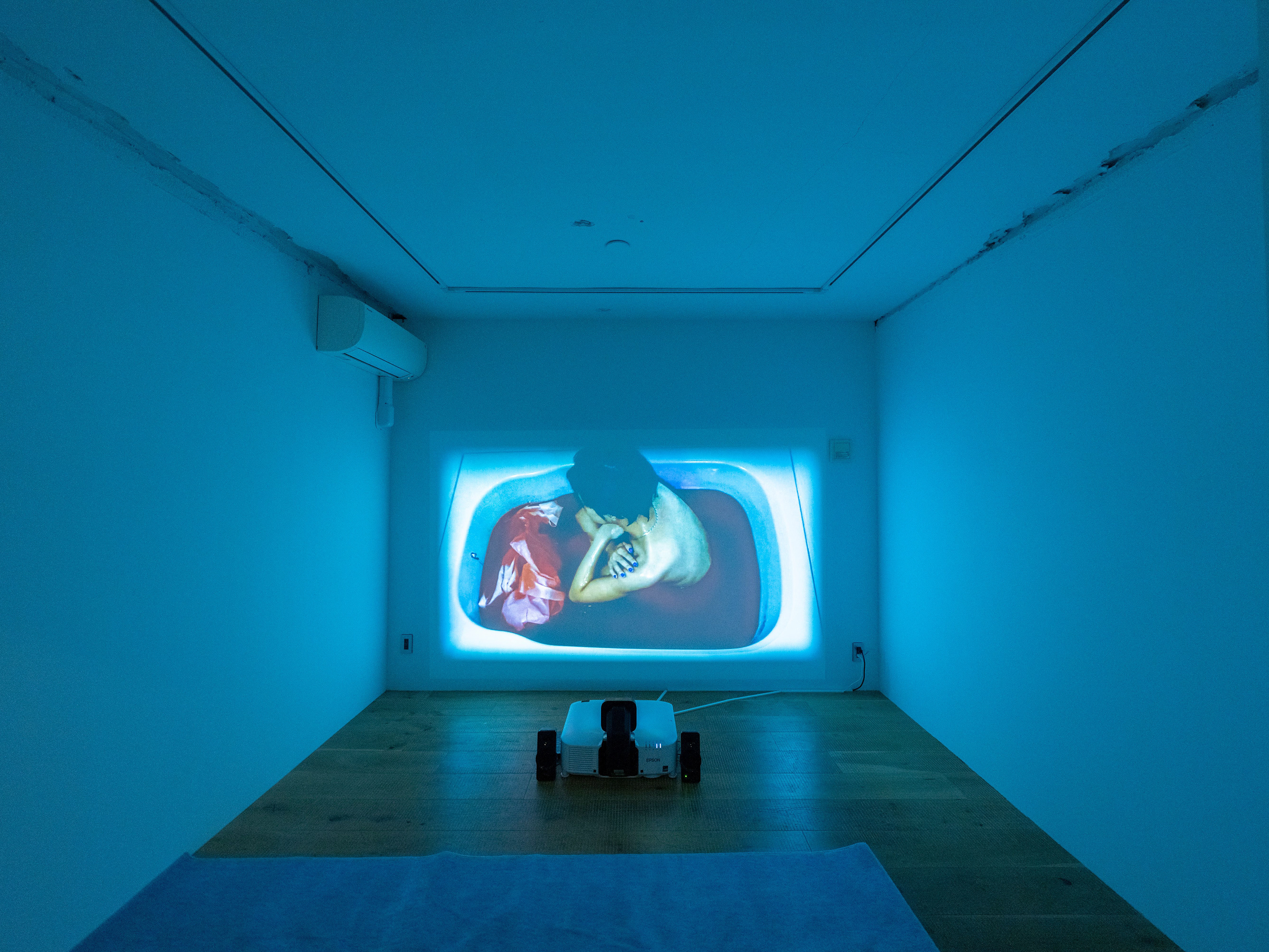
2026 6分40秒
シングルチャンネルビデオ、デジタルハイビジョン、ステレオ
シングルチャンネルビデオ、デジタルハイビジョン、ステレオ
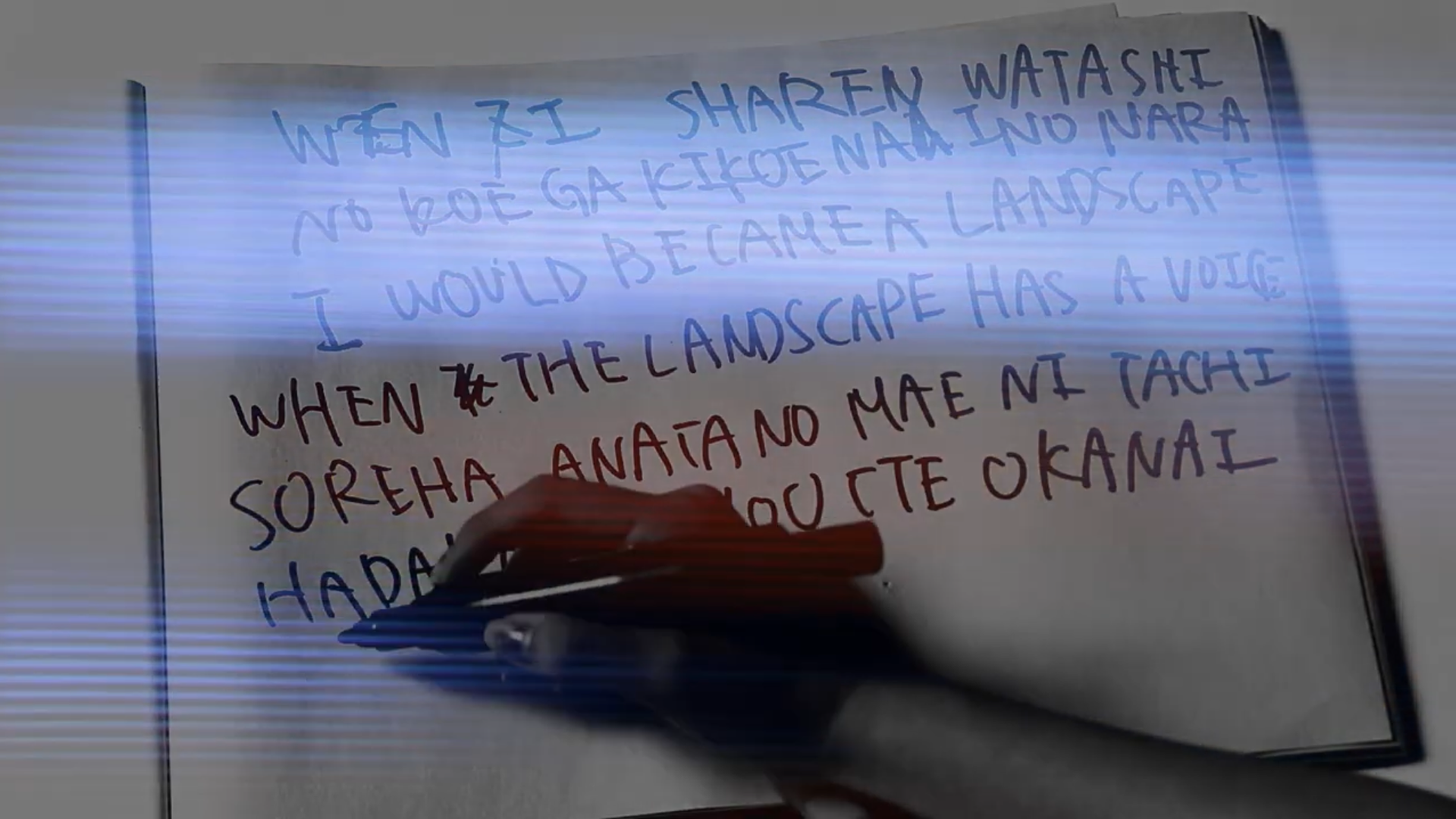
中国語と日本語には、それぞれ拼音(ピンイン)とローマ字が存在する。異なる言語の発音をアルファベットという共通の記号体系に置き換えることは、近代化や情報伝達の効率化において重要な役割を果たしてきた。
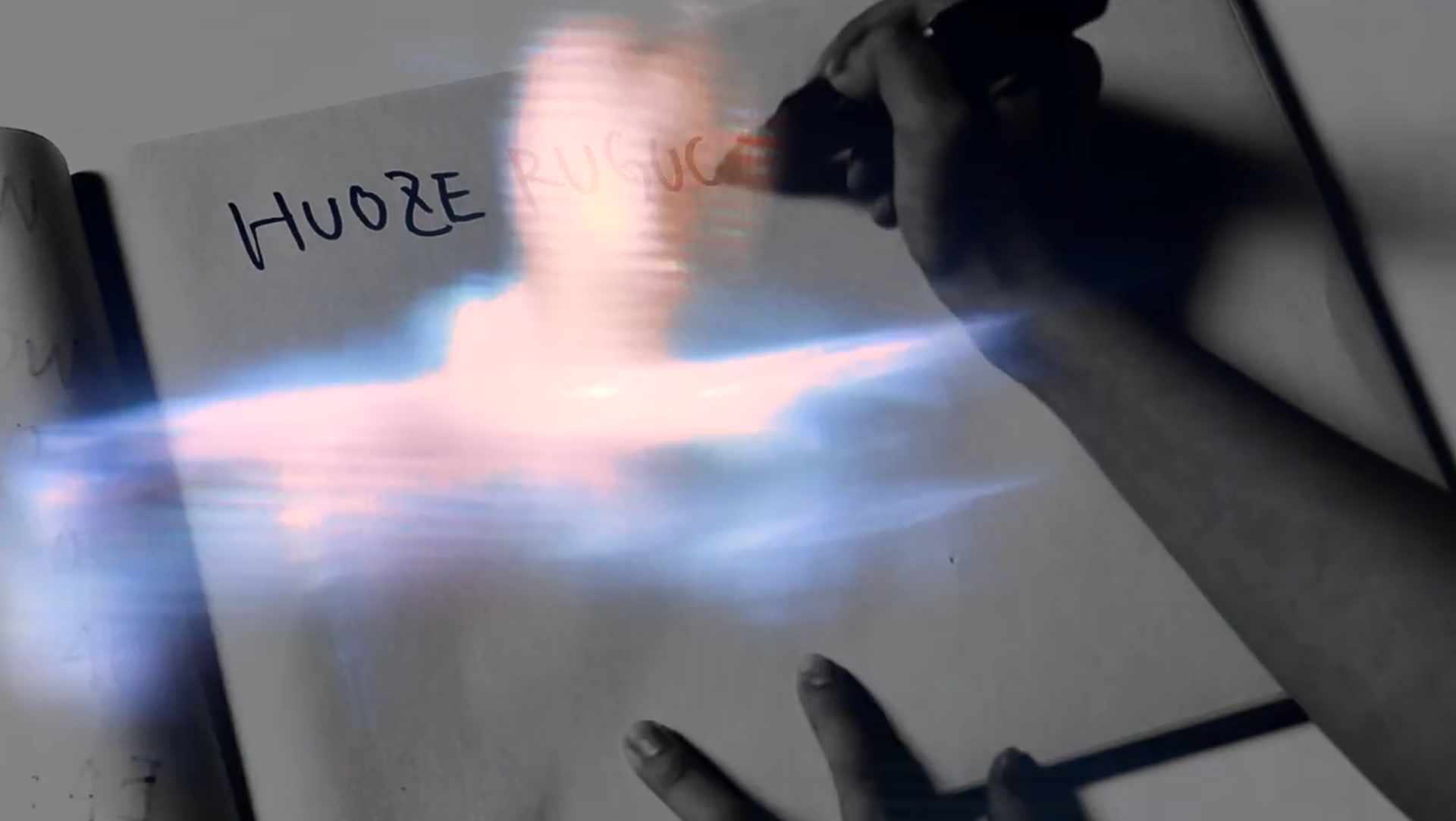
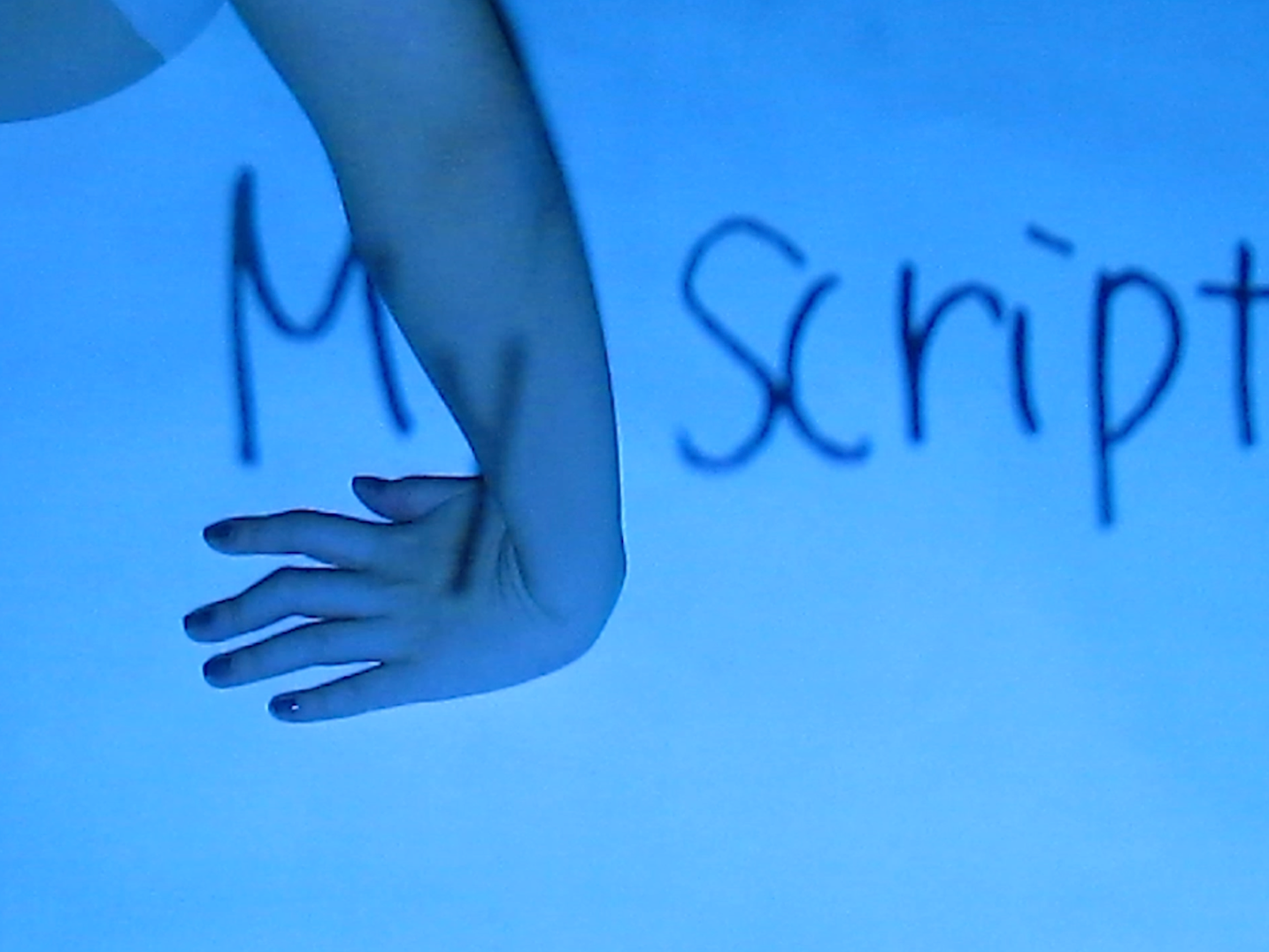
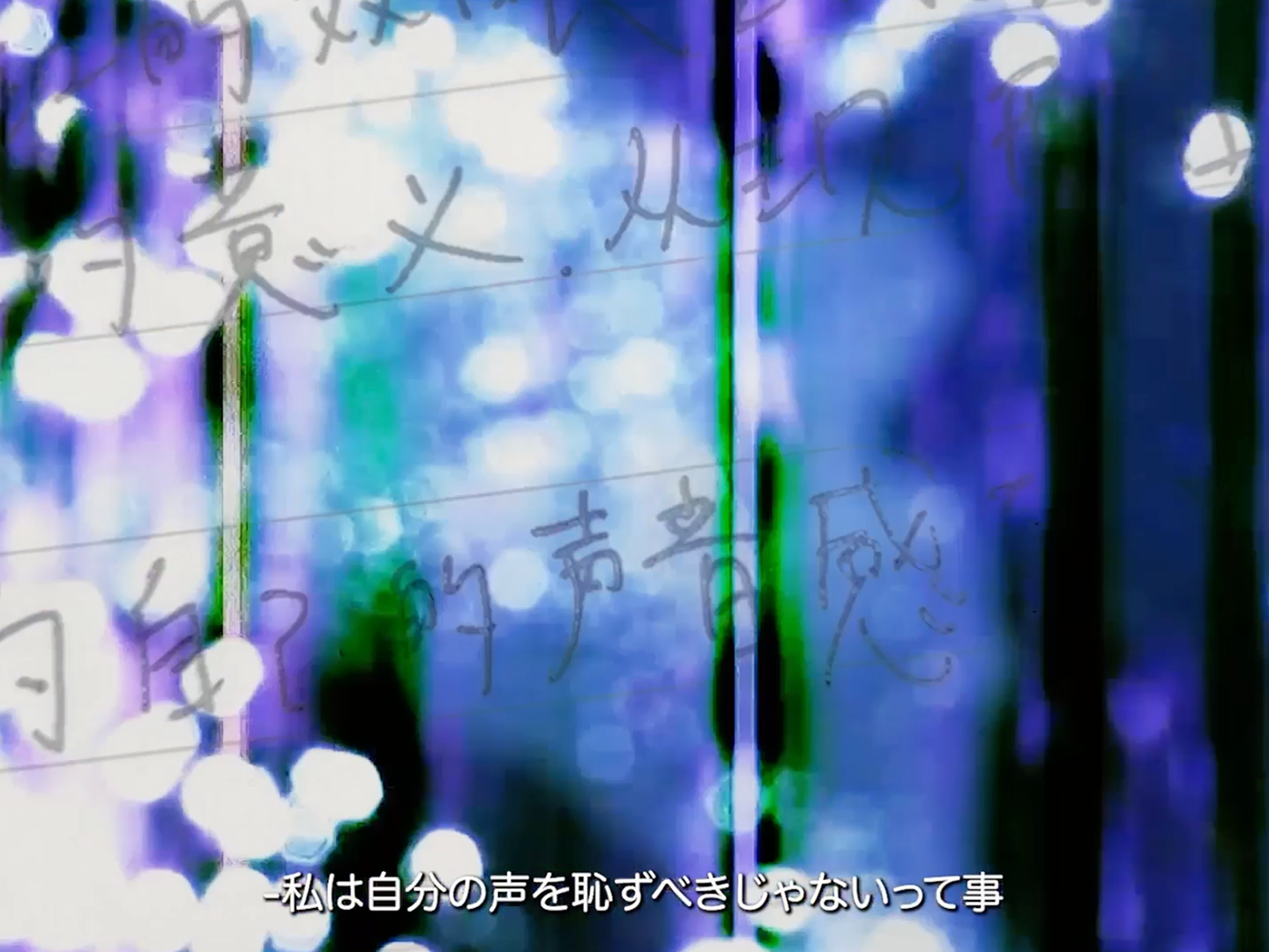
本作では、日本語、中国語、英語を混在させたテキストを用いることで、記号の統一と言語理解のあいだにある隔たりを可視化することを試みた。文字という記号体系が共通化されたとしても、言語が異なれば意味は分断され、文章は容易に解体されてしまう。
何かを伝えるためには、一つの言語体系に従い、整合的な文法を備えた文章でなければならない。私たちは複数の解釈が存在する状態に耐えられず、意味や答えを一つへと収束させようとする。その欲望について考察した作品である。
2026 6 min 40 sec
Single-channel video, digital HD, stereo
Single-channel video, digital HD, stereo
What do Japanese and Chinese have in common?
Chinese employs Pinyin, while Japanese uses Romanization. Both systems translate spoken language into the shared framework of the Latin alphabet. Such standardization has played an important role in modernization and communication. After all, this very text is written using an alphabetic keyboard.
In this work, I combine Japanese, Chinese, and English texts into a single linguistic field. Even when writing systems are standardized, language itself remains fragmented. Meaning collapses, and sentences become unreadable.
To communicate effectively, language generally requires coherence, grammatical order, and a shared system of understanding. Yet I am interested in the discomfort that emerges when multiple meanings coexist. The work examines our tendency to seek singular interpretations and fixed answers, even within inherently unstable systems of language.